
Greenery and flowers are perfect for decorating indoors and out. Therefore, you will want to fill large planters with flowers, greenery, and bushes to make a big visual impact. Large planters are a must for a grouping of flower pot planters. However, filling large planters can be challenging and expensive. So using lightweight pot fillers saves money and your back.


After selecting your planter, consider a few things before filling it out.
Steps to Fill Large Planters
First, will you need to move the planter?
Is it a tall, thin planter?
1. Planter Drainage
Drainage is essential for allowing excess water to drain away from your plants. Thus avoiding rot root. You can read more about container planting in this earlier post.
Where your planter will be located will determine if you need holes in the bottom. If you do, you can drill them into the bottom of your planter. In other words, if your planter is on a covered porch, you will not need to drill holes for drainage; however, if your planter is in an area that will receive rain, then you will need to have drain holes.
2. Planter Filler
Why use a pot filler? l
If your planter is large and/or tall, the potting soil needed to fill it will make it extremely heavy. In addition, using a good-quality potting mix to fill the entire planter will be expensive.
For these reasons, I recommend using a lightweight filler that allows for drainage.
Pot Fillers (options):
- Pool noodles
- Plastic water bottles (empty)
- Cans (empty)
- Packing peanuts
- Pinecones
- Sticks
- Milk jugs
Large Planter Filling Supplies
The supplies you will need are simple and inexpensive.
- Pool noodles (or the filler of your choice)
- Hardware cloth
- Tin snips
- Landscape fabric
- Electric knife (for pool noodles)
- Potting mix
- Rocks or bricks – heavy fillers (used for stabilization in tall planters)

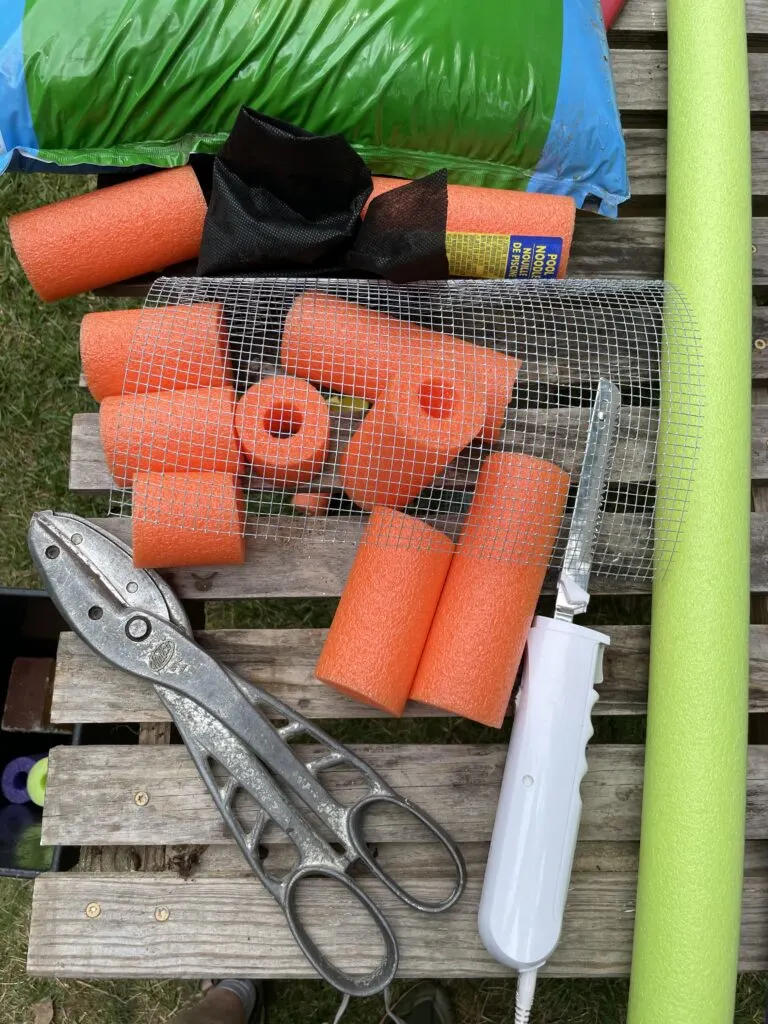
Before filling your pot,
place a piece of landscape fabric over the bottom of the pot.Note: if your planter is tall and has a small bottom, place a couple of bricks or a few handfuls of rocks in the bottom to stabilize your pot.
Next, add your filler. I filled the bottom with pool noodles placed around and on the bricks for this planter.

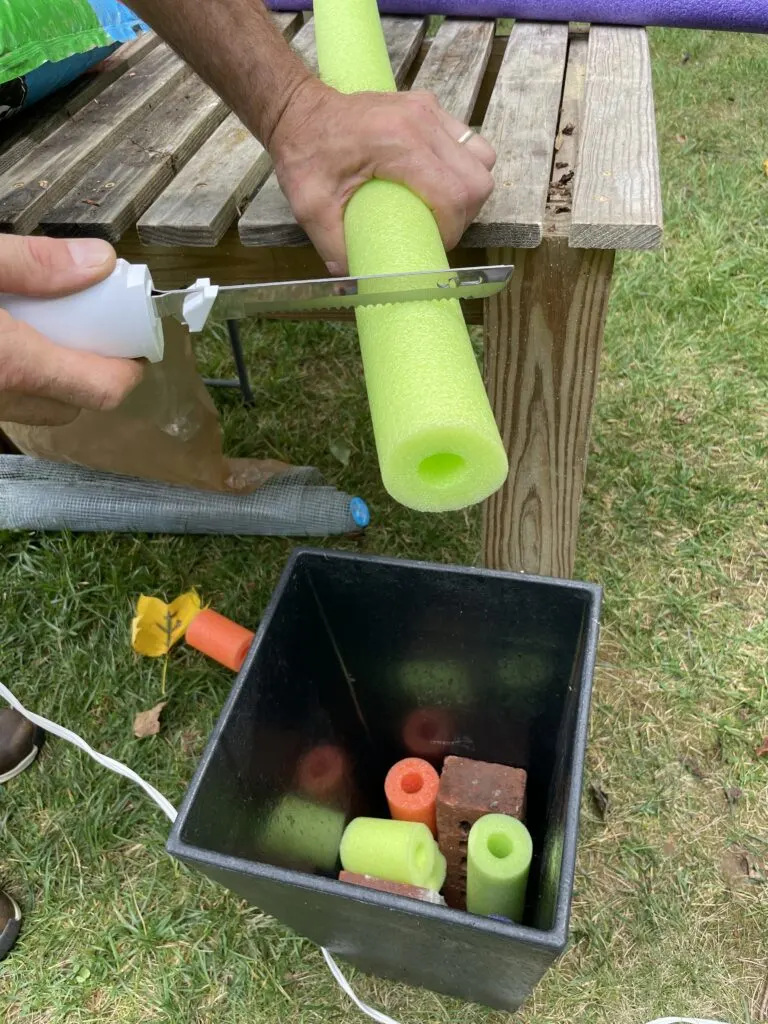
Note: do not overfill your pot. Be sure to allow enough room for your plant’s root systems roots to grow.
3. Hardware Cloth
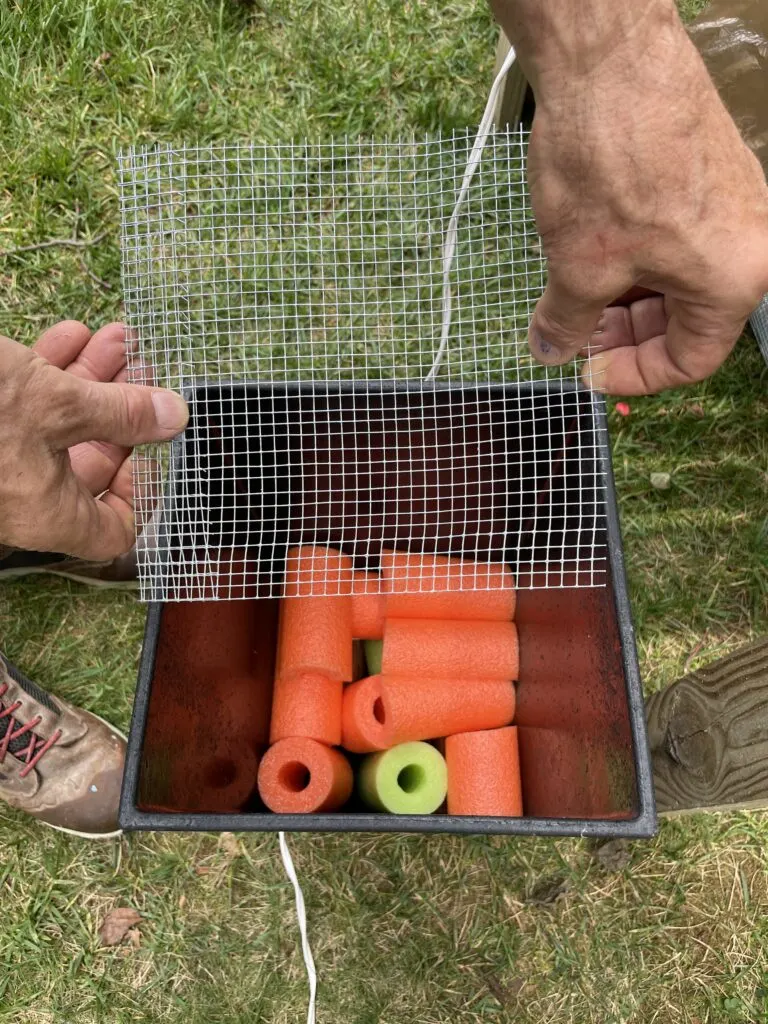
To add a layer of hardware cloth, I measure the inside of the pot at the top of the pot fillers.
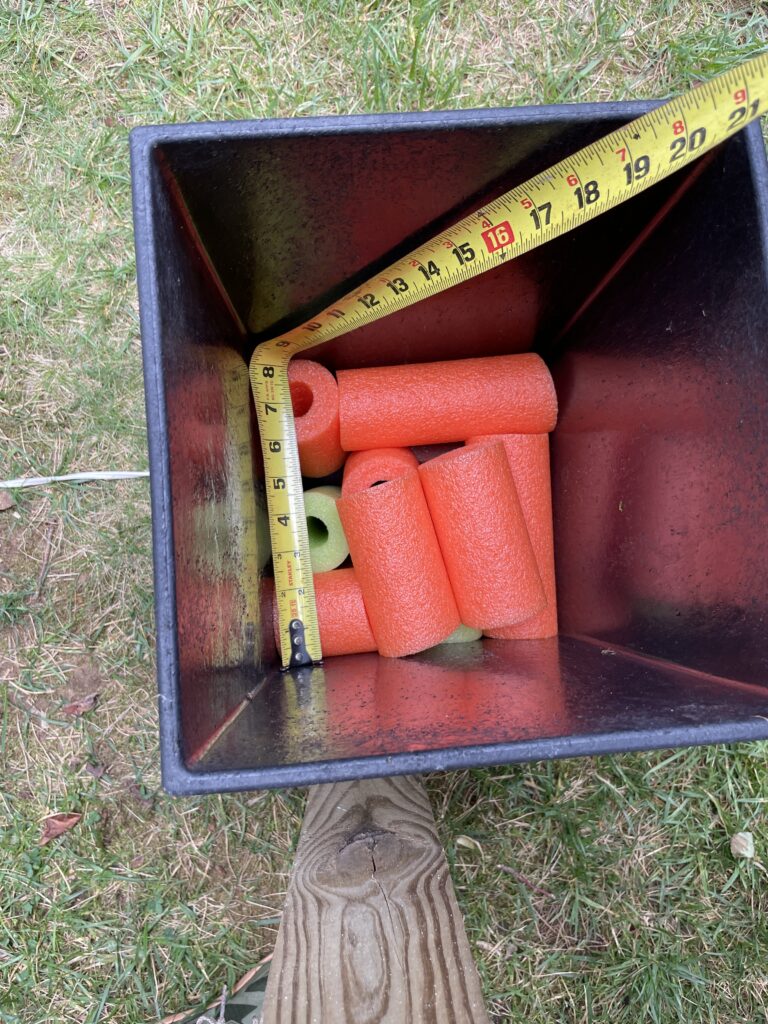
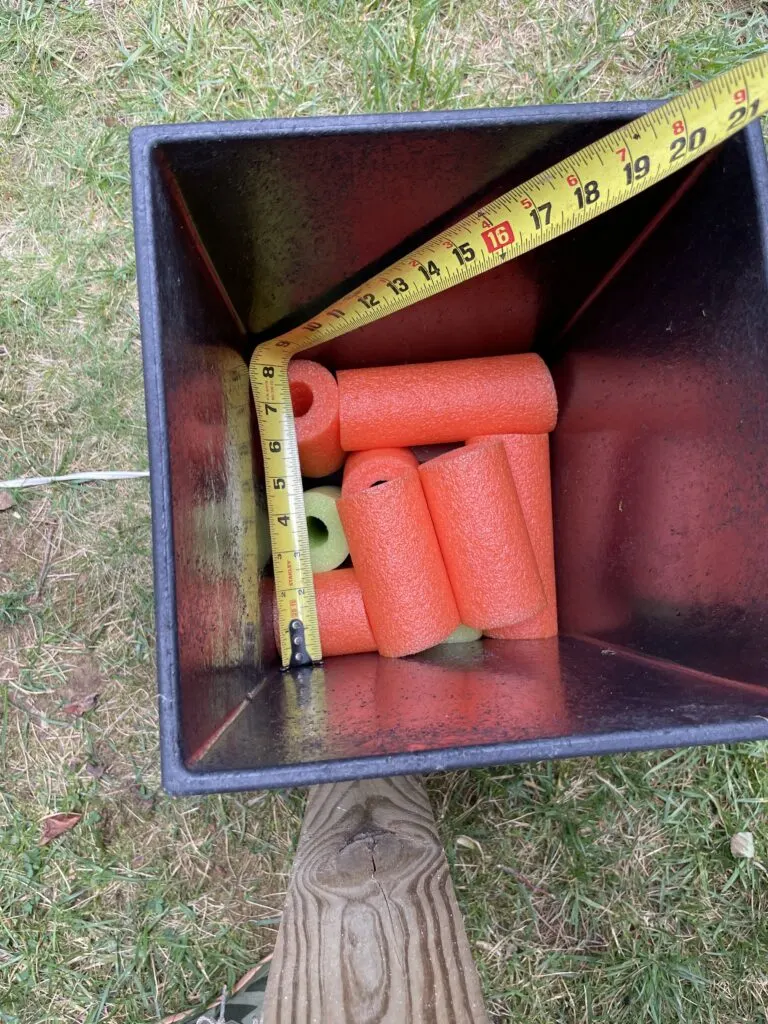
Next, I cut the hardware mesh with tin snips.
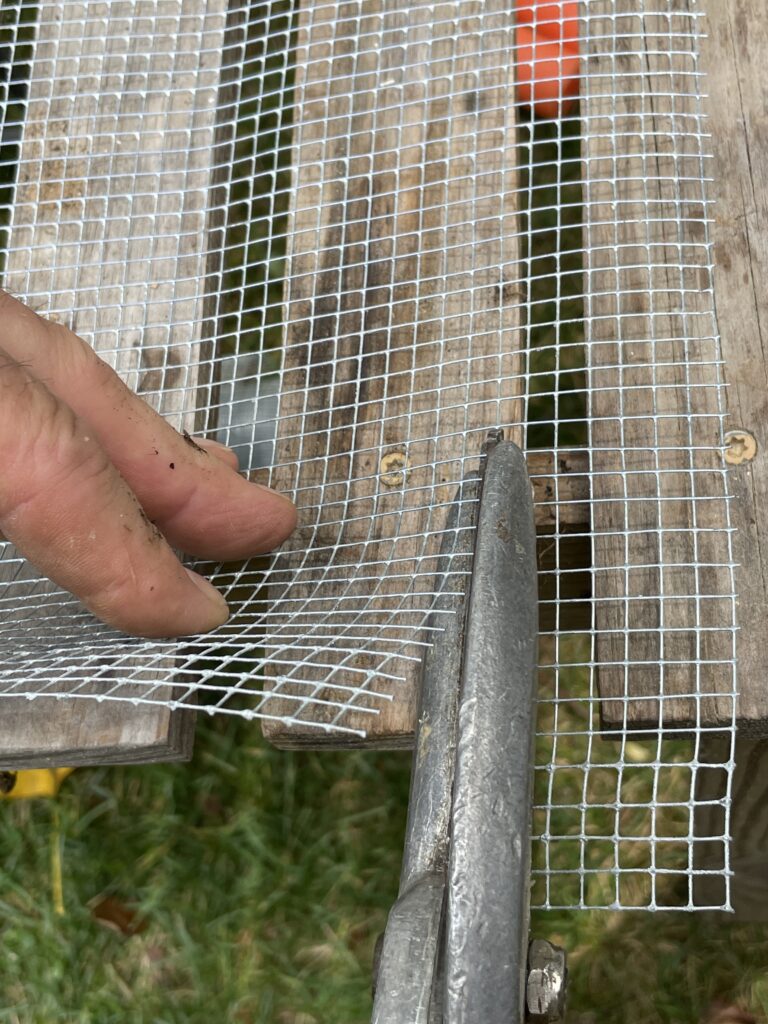
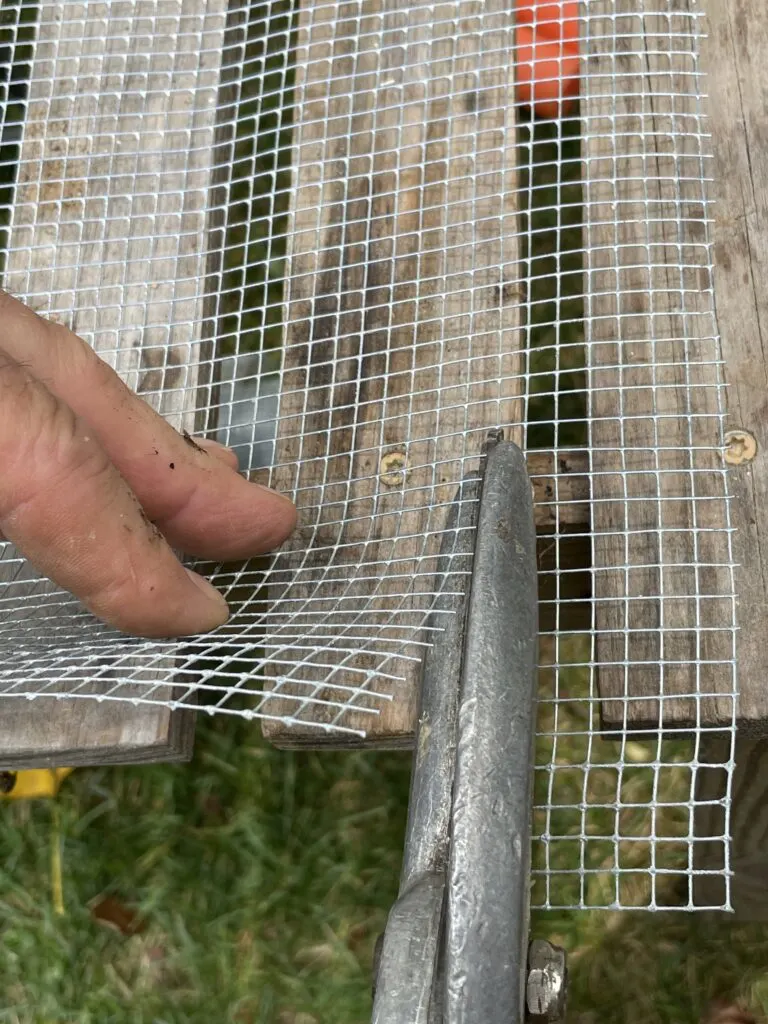
Then I placed the hardware fabric over the filler material.

4. Landscape Fabric
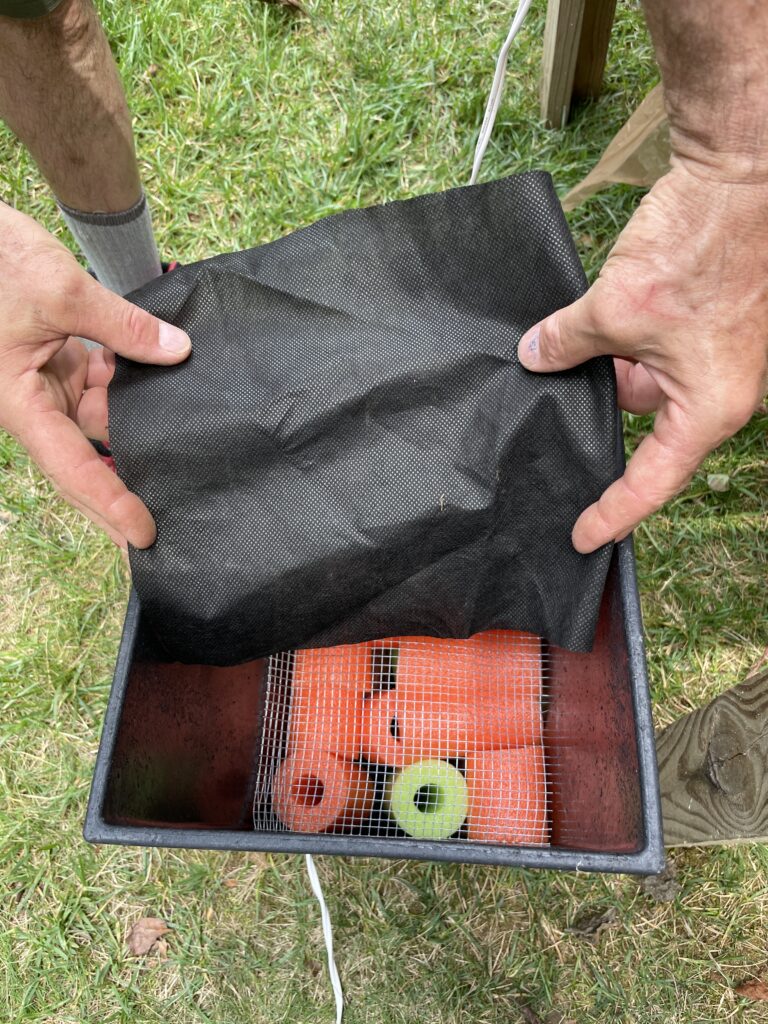
Next, I cut landscape fabric the same size as the hardware fabric.
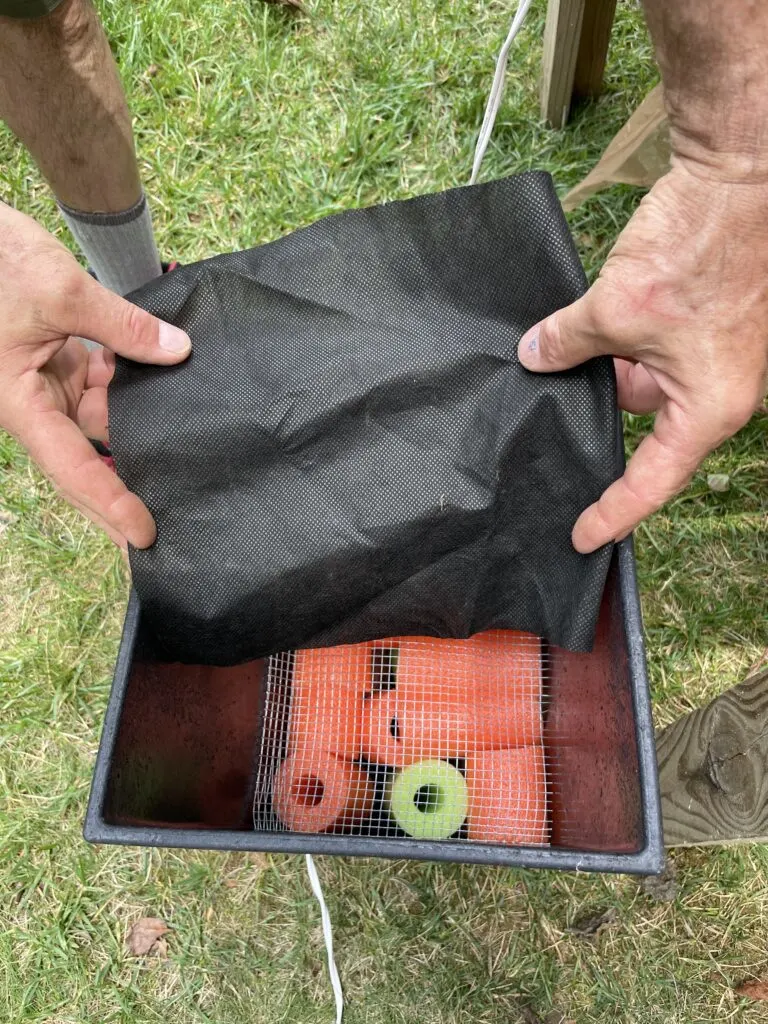
Fill Large Planters with Soil (Potting Mix)
You will want to use a quality potting mix. Potting mix is lighter than ground soil and allows plants to grow easily in planters. It also holds moisture, and it can contain fertilizer.
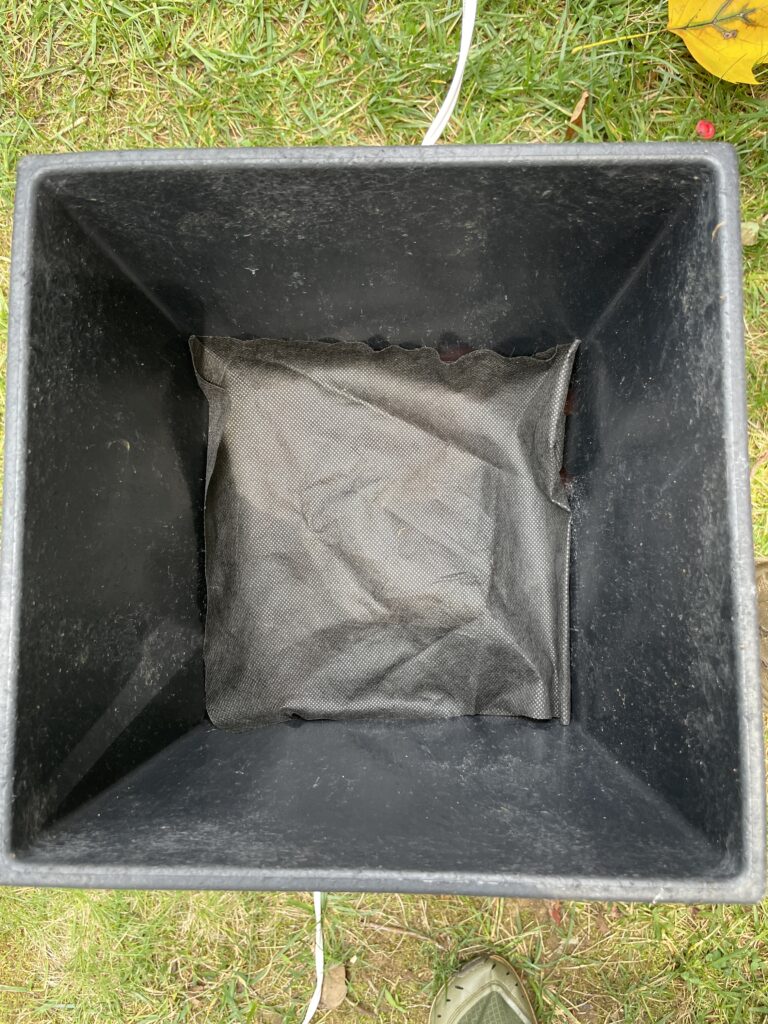
Next, add your plantings and watch them grow and fill in the spill over the planters.

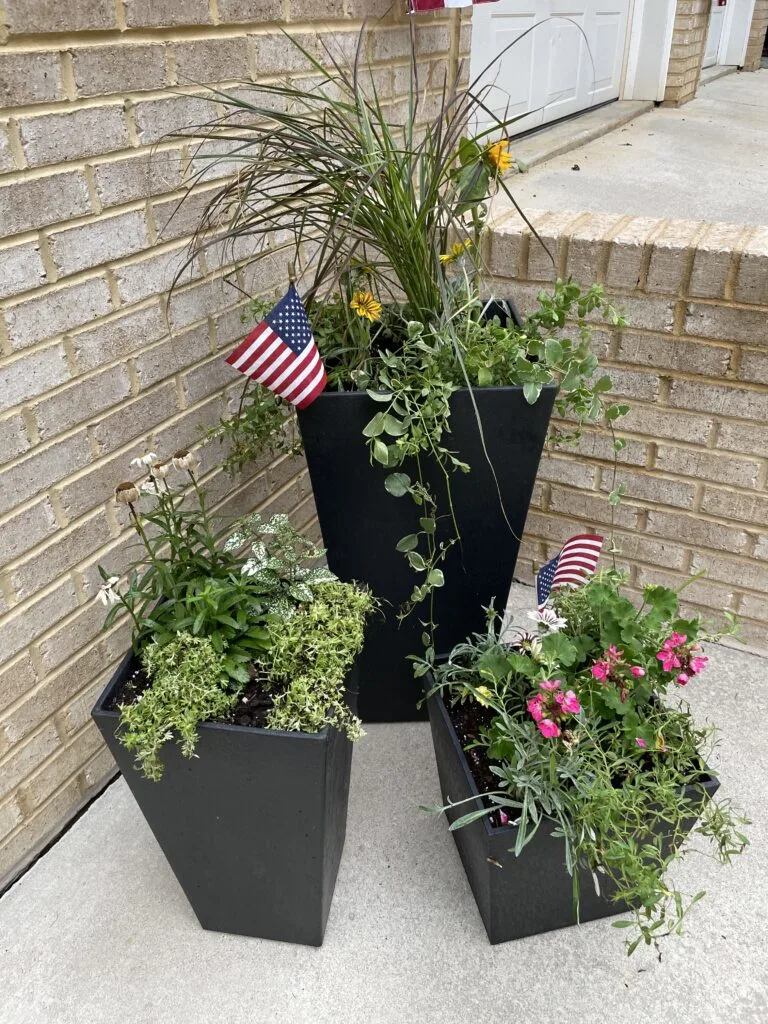
The plants fill in after a month or so.
More Planter Inspiration:
If you want to decorate your planting pots before filling them, I think you might like this adorable idea.
See you soon,
Kippi
Ps. This post was shared on Between Naps on The Porch.
Megan roy
Sunday 19th of April 2026
Hello so I am just a concerned lover of yr content hun and I had to throw this out there for you ....please do not take offense anyways any and all plastics that you would be using in ur planters or did forbid ur planters with veggies in them are extremely BAD HUN THEY RELEASE MICRO PLASTICS THAT WILL CAUSE CANCER HERE IS A FACT FINDING BIT OF INFO FOR YA AND A BETTER ALTERNATIVE HOPE THIS FINDS U WELL MUCH LOVE ❤️ MEGS " If i use Pool noodles in my garden plant pots will that potentially release micro plastics into my growing plants"
Yes, using pool noodles in plant pots can release microplastics. Pool noodles are made of polyethylene foam, which breaks down over time due to UV exposure, water, and heat. As they crumble, they can release these microparticles into the soil, making them a risk for contamination in edible plant pots, though they are often considered acceptable for ornamental plants. Key Considerations and Alternatives: Biodegradation Issues: Pool noodles are not biodegradable and will eventually degrade into smaller, lasting plastic particles in your soil. Better Alternatives: To improve drainage and reduce soil volume in large pots, consider using safer, eco-friendly materials like pottery shards, pinecones, wood chips, or rock/gravel. Risks: While some argue that polyethylene is non-toxic and used in food packaging, others warn against putting it directly into the soil due to long-term environmental concerns and microplastic pollution in food crops. This goes along with any type of plastic in general hun
debbie-dabble
Saturday 1st of June 2024
Kippi, Great idea using pool noodles....I use cans or bottles...love the idea of the chicken wire and cover it with the landscape fabric....Brilliant!! I have a rather large pot that I will try this out on!! Thanks for the inspiration, my friend!! Hugs, Deb Debbie-Dabble Blog